You are viewing Dehart Home.



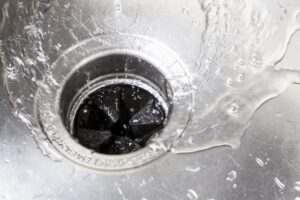
Imagine this scenario: you come home after a long day of work. You start chopping vegetables and cooking your dinner. You go to dump the cooking byproducts down the drain and… your kitchen sink is backed up.
So, you reach for that bottle of store-bought liquid drain cleaner you keep under the sink, clear the clog, and call it a night. But what if we told you this is exactly what you shouldn’t do? Chemical drain cleaners of this nature are not the answer—in fact, they can actually do more harm than good. Read on as we uncover the problems with store-bought drain cleaners and the power of professional drain cleaning.
Why Chemical Drain Cleaners Can Damage Pipes and Fail to Clear Tough Clogs
We understand why you’d think that drain cleaning chemicals would be the simplest way to unclog your backed-up drains. Most of the time, though, they don’t truly work. This is because the chemicals in these liquid drain cleaners might be formulated to dissolve some clogs, like hair, but not other common clogs. These other blockages can include mineral buildup from hard water, grease, soap scum, and food particles.
At the end of the day, all these store-bought solutions might do is push the clog further down the pipe without actually resolving anything. But this isn’t the only reason you should avoid these “solutions.” Chemical, store-bought drain cleaners are caustic and highly toxic. This means not only can they be harmful to you and your family’s health, but also harmful to your plumbing pipes. They slowly and surely eat away at the lining of your pipes until you find yourself dealing with leaks or corrosion.
Safe and Effective Ways to Clear Clogged Household Drains
In many cases, you can clean out your own drains without the use of chemical drain cleaners. This is especially true if it’s a superficial clog we’re talking about, near the surface of your drain. If you have a plunger, then this can be the go-to solution, especially if it is your kitchen sink that is blocked up or your toilet. A plunger helps you create suction, and this enables the blockage to loosen up and make its way down the drain. You’ll just need a little bit of “elbow grease” to help it along!
What if, however, it’s not necessarily that your drains are clogged up but they smell bad? There’s a DIY solution for that as well! All you’ll need is a little bit of vinegar and baking soda. First, add ½ cup of baking soda to the drain, then follow that up with a cup of vinegar. Let it since for 5-10 minutes, then wash it all down with hot water.
What Types of Clogs Need Professional Drain Cleaning?
Some drain clogs are too deep or stubborn for plungers and other basic DIY methods. Professional drain cleaning may be needed for:
- Recurring clogs that return after temporary fixes
- Grease buildup inside kitchen drain lines
- Soap scum and hair that accumulate deeper in pipes
- Mineral buildup caused by hard water
- Food particles and debris lodged inside drain lines
- Blockages located farther down the plumbing system
Professional drain cleaning can locate the source of the blockage and remove buildup more thoroughly, helping restore proper drainage and reduce recurring problems.
How Professional Drain Cleaning Removes Stubborn and Recurring Clogs
Our plumbers have professional tools we can access to truly relieve drain clogs. These tools include motorized drain augers and hydro-jet systems, which are powerful and used to scour the inside of the pipes. First, we start with a video pipe inspection to ensure that we know where the clog is located. This also helps us spot other problems, like leaks, etc.
If you have a clog or any plumbing problem you can’t solve on your own, please don’t hesitate to contact us!
Frequently Asked Questions
Question: Why does my drain keep clogging even after it has been cleaned?
Answer: Recurring clogs can indicate that buildup remains deeper in the drain line or that another problem, such as tree roots, pipe damage, or poor drainage slope, is interfering with water flow. When the same drain repeatedly backs up, a more thorough inspection can help identify the underlying cause instead of repeatedly clearing the immediate blockage.
Question: Can professional drain cleaning help prevent sewer backups?
Answer: Professional drain cleaning can remove accumulated grease, debris, mineral deposits, and other obstructions that may eventually restrict wastewater flow and contribute to backups. It cannot prevent every sewer problem, however, especially when damaged pipes, root intrusion, or structural defects are responsible for the blockage.
Question: How often should drains be professionally cleaned as preventive maintenance?
Answer: There is no single cleaning schedule for every home because plumbing age, household size, cooking habits, previous clogs, and pipe condition all influence how quickly buildup develops. Homes with recurring drainage issues or older plumbing may benefit from periodic professional evaluation rather than waiting for a complete blockage.
Question: Is professional drain cleaning safe for older plumbing pipes?
Answer: Professional drain cleaning can be safe for older pipes when the plumber considers the pipe material, age, and structural condition before selecting a cleaning method. If corrosion, cracking, or deterioration is suspected, inspecting the line first can help determine which approach is least likely to place unnecessary stress on the plumbing.
Question: When does a clogged drain need pipe repair instead of drain cleaning?
Answer: Drain cleaning may restore normal flow when the problem is caused by removable buildup or an obstruction inside an otherwise sound pipe. If recurring clogs result from cracks, collapsed sections, severe corrosion, root entry points, or other structural damage, repairing or replacing the affected pipe may provide a longer-term solution.
Contact DeHart Plumbing, heating, and Air Inc. today for professional drain cleaning service in Modesto, CA.